
Common Ground
What traveling has taught me about trading, faith, and human nature.

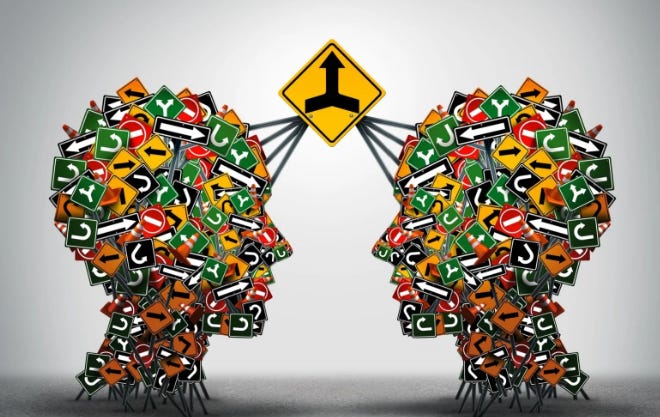
Over the past several months, I’ve spent a great deal of time traveling — meeting people from different countries, cultures, and religious traditions. I’ve shared meals with Christians, Buddhists, Hindus, Muslims, Jews, and people with no formal faith at all. We spoke about family, work, suffering, purpose, discipline, fear, and hope.
Despite obvious differences in language, customs, and beliefs, I was struck by something deeper: The values that sustain meaningful lives are remarkably similar everywhere.
Humility. Discipline. Compassion. Self-control. Curiosity. Service to others. The ability to endure hardship without becoming bitter. The willingness to keep learning.
And the more conversations I had, the more I realized something else - those same principles form the foundation of successful trading and investing.
After more than 30 years in the markets, across asset classes, cycles, booms, panics, bubbles, and crises, I’ve come to believe that markets are ultimately a mirror of human nature. Prices move not just because of earnings reports or economic data, but because of greed, fear, ego, hope, envy, impatience, and regret.
That’s why mastering markets first requires mastering yourself.
The ancient sages never traded leveraged ETFs or watched central bank press conferences. Technical analysis that started with Japanese rice traders in the 1600s didn’t understand all of the indicators we have now. However, all understood human behavior deeply. And human behavior hasn’t changed very much.
The Common Ground of the major religions and cultures
One of the most fascinating discoveries from my travels was how often the world’s major religious and philosophical traditions converge on the same truths. So much of what we see in social media emphasizes how different we all are. If you aren’t IN my echo chamber you are AGAINST my echo chamber. That is so far from the truth. When I dig deeper into the ethos, the moral code, that we all share, at some basic level (deep down for some of us), there is a LOT we have in common.
Humility
Christianity teaches meekness and warns against pride.
Buddhism emphasizes dissolving the ego and seeing clearly.
Hinduism speaks of surrendering attachment and acting without arrogance.
Confucianism praises modesty and lifelong learning.
Markets teach this lesson brutally. Every single day.
No matter how intelligent, experienced, or successful you are, the market will eventually humble you. Overconfidence is one of the fastest paths to destruction in trading. This is one of the most basic tenets I hope to pass on to my Derivatives and Trading Academy. Respect the market.
Humility is not weakness. It is survival.
Compassion and the Golden Rule
Nearly every tradition teaches some version of treating others as you would want to be treated:
Jesus Christ tells us to “Love your neighbor as yourself.”
In Buddhism, there is a focus on compassion and loving-kindness.
Those who are Hindu know about ahimsa (non-violence) and selfless service. Gandhi exhibited this clearly.
Confucian humaneness and reciprocity are core to the belief system which drives social stability.
In a world increasingly driven by outrage and tribalism, this common ground matters.
And yes, it matters in markets too.
The best traders I’ve known are often generous with younger traders, respectful of opposing viewpoints, and capable of disagreeing without hostility. Confidence does not require contempt.
Learning Through Adversity
Every meaningful tradition recognizes suffering as part of growth.
Losses, setbacks, mistakes, humiliation, failure — these are not interruptions to life. They are part of life.
Trading reinforces this lesson every day.
You will be wrong. Repeatedly.
The question is not whether you experience losses. The question is whether you learn from them or let them poison your judgment.
Resentment and self-pity are expensive emotions.
Reflection and adaptation are profitable ones.
Self-Discipline and Emotional Control
The traditions differ in theology, but many converge on the importance of inner mastery:
Control impulses.
Avoid excess.
Develop patience.
Pursue wisdom over immediate gratification.
This is almost identical to what successful trading demands.
Most catastrophic losses do not come from lack of intelligence. They come from lack of discipline.
Greed. Revenge trading. Panic. Ego. Impulsiveness.
The enemy is rarely the market itself.
The enemy is usually the trader in the mirror.
How These Principles Shaped My Trading Rules
Over the years, many of you have asked about the core principles behind Stay Vigilant. Looking back, I realize these rules are not just market rules. They are human rules.
Rule #1: Stay humble
The market owes you nothing.
Humility keeps you adaptable. It keeps you listening. It prevents small mistakes from becoming catastrophic ones.
The moment you believe you’ve “figured out” the market is usually the moment danger begins.
Rule #2: Learn from your losses
Every loss contains information.
The key is to analyze mistakes honestly — without denial, ego, or emotional attachment.
The best traders are not the ones who never lose. They are the ones who evolve.
Rule #3: Keep your powder dry
This applies financially and emotionally.
Maintaining reserves — cash, patience, emotional energy — allows you to act rationally when opportunity appears.
People who exhaust themselves emotionally or financially lose the ability to think clearly under pressure.
Rule #4: Maintain intellectual curiosity
The world changes constantly.
The best investors remain students forever. Traveling recently reminded me how dangerous intellectual isolation can become. Spending time with people who see the world differently sharpens your thinking. It challenges assumptions. It forces humility.
That applies to markets too.
Rule #5 and #6: Stay unbiased and understand both sides
Every trade has another side. What are the people on the other side of your trade thinking?
If you cannot articulate the strongest argument against your position, you probably do not understand your position well enough.
Good traders seek truth, not validation. As Ned Davis talked about in his book of the same name, it isn’t about being right, it’s about making money. That means avoid confirmation bias. That means cognitive dissonance is your enemy.
That requires intellectual honesty.
Rule #7: Value being out of consensus
Independent thinking creates opportunity.
But there is an important distinction: Being contrarian for the sake of being contrarian is ego. The bearish argument always sounds more compelling. I know, I have been a bear quite a few times. However, sometimes, the consensus is right.
Being independently thoughtful because evidence and process lead you there is discipline. Respect the process. However, respect price action too. I learned this in early 2023 when the fundamentals were bearish but the technicals were bullish. Right now, it may be the opposite.
The crowd is sometimes right. Sometimes terribly wrong.
Wisdom is knowing the difference.
Rule #8: Help others
This may be the most important rule of all.
Across cultures and religions, I found the same recurring insight: a meaningful life ultimately points outward, not inward.
Service matters, mentorship matters, community matters. Sharing with your peers makes you better, not weaker. It is the Socratic Process. Debate with others. If you win, you may be onto something. If you lose, maybe it is better to re-assess than put on bad positions.
At some point, success without contribution begins to feel hollow. Been there, done that. I have never been happier than when I am talking about markets with my students. Macro Idea Dinners were great, but the egos in the room were tough to swallow, even with a nice Cabernet Sauvignon. Helping others is what we are all called to do, and it feels awesome to do. Especially when they appreciate it.
Some of the most fulfilled people I met during my travels were not necessarily the wealthiest. They were the people deeply connected to purpose, family, faith, and service to others.
Markets can become all-consuming if we let them. P&L can become a false scoreboard for self-worth.
Helping others restores perspective.
Trading and investing are not merely financial exercises. They are key to finding financial freedom. Financial freedom isn’t a number. It is a mindset. It is being able to live without worrying.
However, they are also daily psychological and moral tests.
They expose impatience, arrogance, fear, envy, impulsiveness, and insecurity. But they also create opportunities to cultivate discipline, resilience, humility, wisdom, and generosity.
The more I traveled, the more convinced I became that these virtues are not accidental cultural preferences. They are enduring truths about what allows human beings to flourish — whether in markets or in life.
Technology changes, asset classes change, narratives change. In the 90’s, it was all about the big mutual funds. In the 00’s, it was all about the hedge funds. In the 10’s it was all about ETF’s. Now it is all about private markets. Despite all of this change, there is something that stays the same.
Human nature. Thus, you need a process that is disciplined but adaptable.
And perhaps that is why wisdom written thousands of years ago still applies so directly to modern markets.
Stay humble.
Stay curious.
Stay disciplined.
Stay Vigilant.

I always look forward to reading your posts. Some are introspective, others academic. Yet, they all have your special touch. I will keep this one close to read often. Thank you Rich.
Agree words and wisdom that should be shared. Sometimes you can lead a horse to water, but it doesn’t mean they are going to drink.